
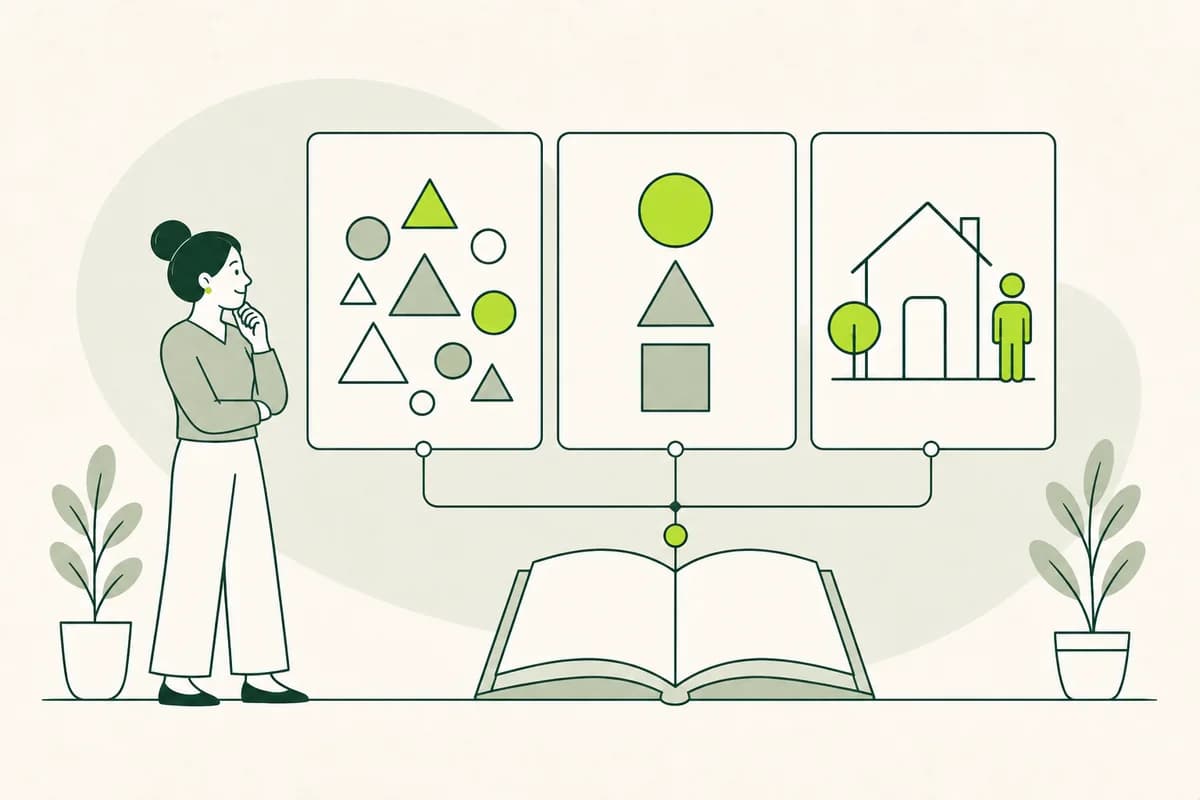
Three Forms of Language Address Different Accessibility Challenges
Choosing a form of language is a decision regarding access to information. Standard language is suitable when the intended readers can confidently use typical public or specialized texts. Plain Language makes things easier for a broad audience by using familiar words, clear sentences, and a logical sequence. Easy Language offers a version with enhanced support for people facing significant barriers to comprehension.
This classification does not imply a hierarchy. A specialized text in standard language may be more precise and understandable for its audience than a clumsy simplification. Plain Language does not mean watering down a message; rather, it removes avoidable linguistic obstacles. Easy Language follows specific linguistic and design guidelines-depending on the ruleset and organizational context used-and is typically tested with the target audience.
Therefore, the decisive factor is not which form an organization generally prefers. For any specific piece of content, the organization must be able to justify who needs it, in what situation, and what the desired outcome is after reading. This process may result in a single main version for everyone or multiple versions serving different purposes. A clear decision prevents the creation of multiple versions of every text as a precaution, without actually improving access for a specific group of readers.
Readers, Task, and Risk Provide the Key Indicators
Start with a specific person in a specific situation. "Citizens" is too broad a term to define a specific linguistic style. A more meaningful scenario is: a person with little experience of the German administrative system wishes to apply for a service for the first time. Consider factors such as common reading barriers, prior knowledge, tools used, and whether personal assistance is typically available.
Next, describe the task. Does the user simply need to find opening hours, compare several options, or understand prerequisites and carry out a time-sensitive action? The more decisions a text requires, the more the flow of information must support the user. The entire process matters here. A clear explanation is insufficient if the linked form uses the same terms differently or lists important conditions only at the very end.
Finally, consider the potential consequences of a misunderstanding. Consequences involving health, safety, rights, finances, or binding deadlines can be significant, yet this does not automatically make "Easy Language" the right choice. Primarily, it increases the need for precise, understandable information and reliable verification. Whether a special version is also necessary depends on the specific audience that needs to be reached.
Four typical types of content lead to different decisions
A page listing the opening hours of a municipal library involves a familiar task, and errors have limited consequences. A clearly structured main version in "Simple Language" can reach almost all visitors here. An additional version offers little benefit if the date, address, exceptions, and contact details are immediately apparent anyway. Standard language may also suffice, provided it avoids internal administrative jargon.
An application for housing benefit involves a combination of unfamiliar prerequisites, required documentation, deadlines, and financial implications. The general service page should provide guidance to a broad audience using "Simple Language." If the target audience includes people with significant comprehension needs, a separate version in "Easy Language" can explain how to access the service and what support is available. Regardless of this, the actual application form itself must remain accessible and understandable.
An internal technical guide for experienced administrators can use standard language with precise technical terms, as these terms are part of their shared work. In contrast, an evacuation instruction is addressed to many people who are under stress. In that context, short, direct statements and unambiguous signs are more important than formal adherence to a specific language style. Prepared supplementary explanations can be helpful, but they must not delay the immediate warning.
A single main version is often sufficient
A single version makes sense when readers have similar tasks and the content can be clearly explained without losing accuracy. Plain language is often suitable as a shared foundation for public websites. It supports people with varying levels of reading experience without segregating them into separate sections. A key requirement is that the version starts with actual questions rather than simply shortening existing sentences.
Standard language can also suffice as the main version. This applies, for instance, to a clearly defined specialist field where readers are reliably familiar with the relevant terms and concepts. However, check whether familiarity is being mistaken for true understanding. If experts frequently ask for clarification, interpret instructions differently, or fail to follow long texts correctly, the existing format is not a good solution simply because it is customary within the organization.
It is not just the extra effort that argues against having multiple versions. More importantly, one must consider whether they provide a genuinely new approach. Two versions serving virtually the same audience complicate selection and maintenance without solving a problem. In such cases, it is better to improve the main version. An additional version should only be created if a specific, identifiable group of readers cannot reliably use the shared version, even after careful design.
Parallel versions require their own clear purpose
An additional version is justified if a significant number of readers cannot achieve their goals using the main version and their needs cannot be met through minor improvements. This may be the case for people who require Easy-to-Read language. In such instances, the new version should fully support a specific task-such as explaining a service, describing how to access it, and offering an understandable way to get in touch.
Multiple versions can also cater to varying levels of prior knowledge. A research institute might offer a technical publication in standard language alongside an introduction in Plain Language. The introduction need not repeat every single methodological detail, but its statements must align with the source material. It should clearly indicate which specific aspect it covers and where interested readers can find the full study.
Selecting a version must be easy for visitors. Labels like "Short Version" or "Other Version" do not explain the difference. Explicitly name "Plain Language" or "Easy-to-Read Language" and provide direct links between versions of the same content whenever possible. Users should not end up back on a general homepage after switching versions. A brief note can also explain the level of detail and support offered by each version.
Legal and source documents impose limits on adaptation
Some documents must be preserved in a prescribed or legally binding format. A contract, official notice, or legislative text cannot simply be replaced by a linguistically simplified version. However, this does not mean readers must be left without support. An understandable explanation can make the purpose, key implications, and next steps accessible while clearly pointing to the authoritative document.
The explanation must not create a false sense of certainty that it cannot actually deliver. Conditions, exceptions, and deadlines require expert verification-especially when misunderstandings could affect rights, health, or finances. If a decision based on individual circumstances is required, the text should state this and provide a way to access advice. While the chosen language style reduces linguistic barriers, it does not eliminate the subject matter's inherent technical complexity.
Requirements regarding rules, labeling, and review for Easy Language vary depending on the specific assignment, country, and chosen standard. Organizations should therefore determine in advance which standards apply and who is responsible for both subject-matter accuracy and linguistic quality. An automatically generated simplified summary is not a verified Easy-Language version. Especially regarding topics with significant consequences, the involvement of appropriate subject-matter experts and members of the target audience is essential.
The decision must remain valid for future updates as well.
Creating, reviewing (for both content and language), and publishing any additional version takes time. Easy Language usually requires an additional review by the target audience. While this effort is not an argument against accessibility, it must be honestly factored into the decision-making process. An incomplete or unverified version does not help readers and-in the case of critical information-can lead to incorrect actions.
Plan for maintenance from the start. Prices, deadlines, contact persons, and procedures often change more rapidly than fundamental explanations. If multiple versions exist, updates from a reliable source must be incorporated into all relevant texts. Define who initiates revisions and which version remains visible until the new one is approved. Outdated Easy-Language content is no more accessible than a current standard version.
Limited resources should first be allocated to content that is frequently used, supports important decisions, or addresses known barriers. This allows an organization to make a few topics fully and reliably accessible, rather than creating superficial versions for its entire range of information. Initial publications help determine the collaboration, review time, and technical support actually required for future versions.
A brief explanation makes the choice of language understandable.
Document the decision alongside the content itself. The note should specify the intended audience, the purpose of the text, known barriers to comprehension, and the potential consequences of errors. Specify the chosen primary version and the rationale for any additional versions. This ensures that future editors do not have to guess-based on the finished text-which problem was originally intended to be solved.
In the case of parallel versions, the rationale should also explain the relationship between them. Describe the information that the more accessible version must fully cover, the location of the source document, and who is responsible for clarifying subject-matter discrepancies. For "Easy Language" versions, it should also be clear which set of rules or professional practices forms the basis and how the intended readers are involved in the review process.
Such documentation need not take the form of an extensive questionnaire. A few specific sentences are more valuable than general statements about inclusion. They assist the editorial team with revisions and management with resource allocation. Above all, they make the choice verifiable: if the target readers are still unable to accomplish their task, the original rationale is no longer sufficient.
Practical experience may lead to changes in the initial choice.
The chosen linguistic style remains an educated guess until its actual use has been observed. Frequent inquiries, incorrectly submitted documents, abandoned processes, and complaints can indicate that the text is failing to fulfill its purpose. Such indicators should be analyzed according to reader group and specific step in the process. A single unclear link might require only a minor correction, whereas repeated fundamental misunderstandings could justify a different version.
Direct testing provides particularly clear insights. Give people from the intended readership a realistic task and ask them to explain what they have understood and how they would proceed. For "Easy Language" versions, individuals with the relevant comprehension needs should be involved. A general question such as "Is the text simple?" is insufficient, as agreement does not prove correct application.
Changes in the information provided can also render a previous choice obsolete. A new target audience, a digital application process, or more serious consequences resulting from an error can alter requirements. Conversely, a newly designed main version might work so well that a nearly identical second version is no longer necessary. Therefore, review the rationale whenever significant changes occur, rather than relying solely on a fixed schedule.
The appropriate linguistic style is determined by the task at hand.
A sound choice integrates three types of knowledge: the actual readers, the task they need to perform, and the consequences of any misunderstanding. Only then is the decision made as to whether standard language suffices, whether "Plain Language" (*Einfache Sprache*) can serve as the shared main version, or whether "Easy Language" (*Leichte Sprache*) is required to provide additional accessibility. This approach prevents both the creation of unnecessary parallel texts and the provision of information that excludes known reader groups.
Start with specific, important content and consider various realistic scenarios. Examples such as opening hours, benefit applications, technical instructions, and safety warnings illustrate why a single answer does not fit every situation. Factor in subject-matter responsibility and long-term maintenance from the very beginning. This ensures the decision does not remain merely a good intention but can be reliably implemented even as circumstances change.
Ultimately, what matters is whether people can find, understand, and use the correct information. A familiar label for the language style used is not proof of this on its own. Observed usage patterns, clearly defined responsibilities, and an honest rationale provide greater assurance. If new insights contradict the initial choice, adjusting the approach is not a failure, but a logical step toward making information more accessible.