
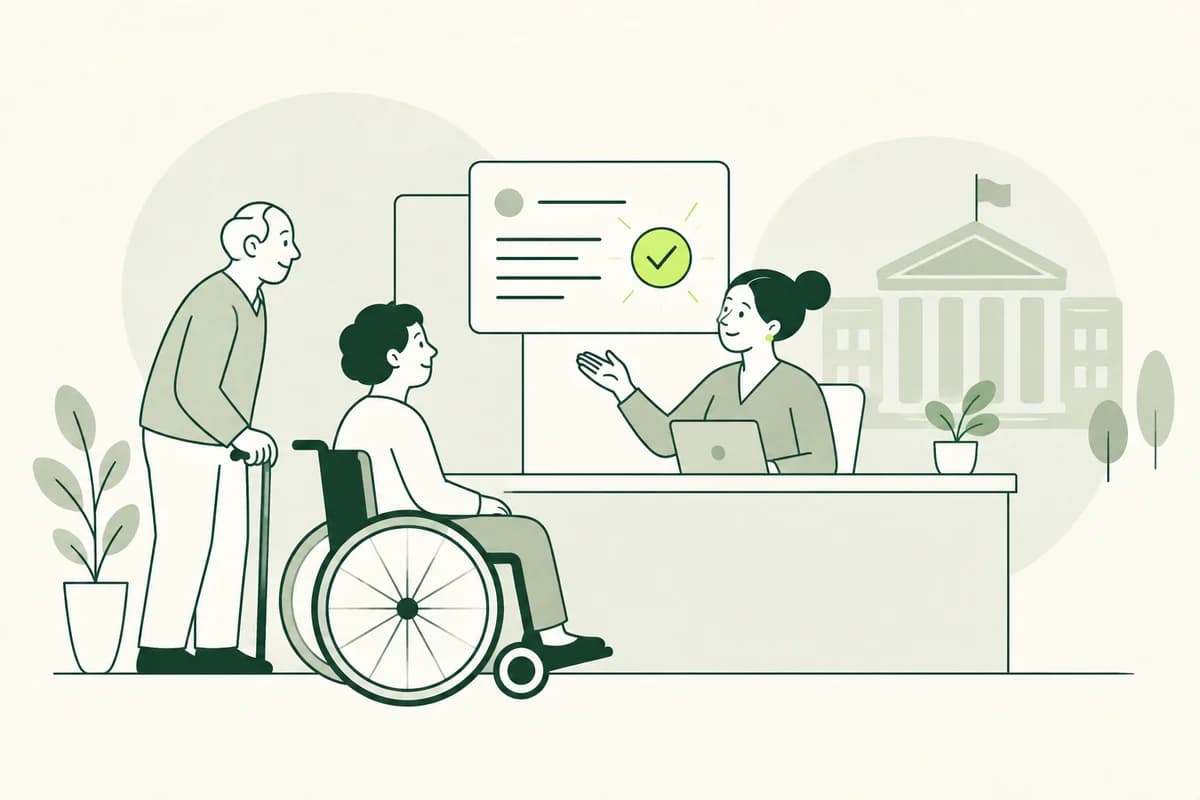
What does OZG 2.0 mean for understandable and barrier-free digital administrative services?
OZG 2.0 is the common name for the OZG amendment law that has been in force since July 2024. It combines seamless and barrier-free portal access with simple and intuitive operation. Successful administration offerings combine technical accessibility, understandable content and clear processes for publishing and updating.
Legal framework for digital administration
| Rules and regulations | Key message | Scope |
|---|---|---|
| OZG 2.0 | § 1a requires a media-free and barrier-free portal network. § 7 requires user-friendliness and simple and intuitive usability of the comprehensive access. | The OZG regulates digital access to administrative services. It does not generally require every piece of information in simple or easy language. |
| BGG | Regulates equality and accessibility in the federal sector. | For states and municipalities, state equality laws apply in addition or instead. |
| BITV 2.0 | Specifies digital accessibility for federal public bodies and contains special home page information in Section 4. | The corresponding state regulations apply to states and municipalities. |
OZG 2.0, BITV and understandable language
Section 1a OZG connects the federal and state governments in a barrier-free portal network. Section 7 focuses on user-friendliness, ease of operation and accessibility. BITV 2.0 § 4 regulates information in plain language in the federal sector. Simple language makes benefits, requirements, forms and next steps understandable to a broad public.
Separate technical accessibility, simple language and easy language
| Area | Purpose | Practical example |
|---|---|---|
| Technical accessibility | Implement digital offers in a way that is perceivable, usable, understandable and robust. | Keyboard operation, semantic structure, contrast and understandable error messages |
| Plain Language | Making complex administrative information clearer to the general public. | Description of services, requirements, documents, costs and process |
| Easy Read | Provide more linguistic support to people with significant barriers to understanding. | Particularly simplified content with clear visual guidance |
Organize and prioritize content
| Contents | priority | Focus |
|---|---|---|
| Forms and errors | Very high | Task, mandatory fields, troubleshooting, confirmation |
| Official notices and deadlines | Very high | Legal effect, deadline, action, contact method |
| Service descriptions | High | Eligibility, documents, costs and process |
| Help texts | High | Suitable for the respective process step |
| Accessibility Statement | High | Completeness, timeliness, feedback path |
| Recurring communications | Medium to high | Templates, versions, responsible body |
Editorial process for understandable content
- 1Start with the most commonly used administrative services.
- 2Assign accountable roles and deputies.
- 3Organize and version the source text.
- 4Choose simple or easy language to suit the target group.
- 5Create the understandable version.
- 6Clearly formulate technical terms, deadlines and next steps.
- 7Publish language versions and clearly link them together.
- 8Automatically incorporate changes to the original into the update.
- 9Evaluate usage, queries and cancellations.
Clear forms, notifications and portals
Forms use clear field names, understandable error messages, a recognizable sequence of steps and an accessible confirmation.
Notices clearly present legal effects, deadlines, legal remedies and next steps. The understandable additional version supplements the clearly marked binding version.
Portals use consistent navigation, uniform terms and clear language change. Recurring content is based on fixed templates and clear update triggers.
Digital governance website widget
- 1Add the Simple8 website widget to the existing website.
- 2Place the button clearly visible on services, forms and help texts.
- 3Enable Simple Language and Easy Language.
- 4Publish the widget after about three minutes.
Frequently asked questions
What is OZG 2.0?
OZG 2.0 is the common name for the OZG Amendment Act of July 19, 2024. The changes have been in force since July 24, 2024 and further develop the legal framework for digital access to administrative services.
What does Section 7 OZG require?
The federal and state governments must ensure user-friendliness and simple and intuitive usability of the comprehensive access. Access and the relevant IT components must be barrier-free in accordance with BITV.
What does accessible digital public administration involve?
Technical accessibility, understandable language and a continuously managed publication process belong together.
Does BITV 2.0 apply to every municipality?
BITV 2.0 applies directly to federal public bodies. For municipalities, the accessibility laws and regulations of the federal states regulate the relevant requirements.
Does the OZG require all content to be available in Easy Read?
No. The OZG requires accessible portal access. Specific Easy Read obligations must be derived from the applicable accessibility rules.
How can online forms be made more understandable?
Clear field names, short help, concrete error messages, visible steps and understandable confirmation reduce barriers.
How does an understandable version complement a decision?
The understandable version clearly explains legal effects, deadlines, next steps and contact channels. The legally binding version remains clearly marked.
Who is responsible for understandable administrative texts?
The department and editorial team work with clear roles, fixed versions and a common publication process.