
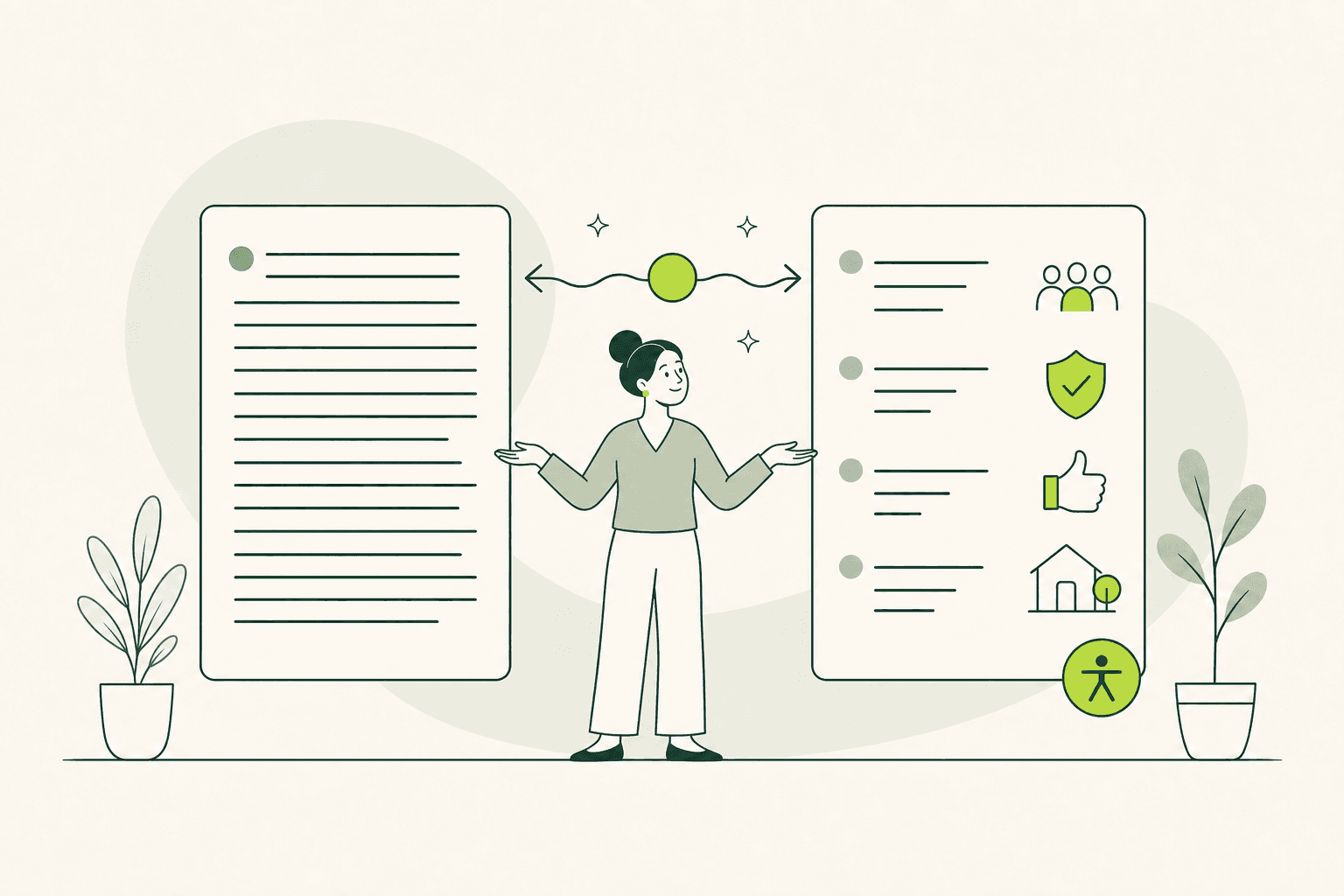
Understand the difference between plain language and easy language.

Plain Language and Easy Language are not the same. Choose the format that best fits the people you want to reach.

Language Modes

Mode Comparison

Plain Language

Designation

Plain Language (Einfache Sprache)

For a broad audience that benefits from clearer structure, more familiar words, and direct actions.

Typical content

  • General service pages
  • Portal guidance
  • Forms and instructions
  • Customer information
  • Internal communication

Reduce unnecessary complexity while preserving professional tone and necessary detail.

Easy Language

Designation

Easy Language (Leichte Sprache)

For people who need particularly short sentences, clear paragraphs and less information at once.

Typical content

  • Essential public information
  • Selected service journeys
  • Audience-specific versions
  • High-priority access information
  • Content to be examined by an expert

Make actions, sequence, and meaning explicit. Review the result with the intended audience or appropriate specialists where possible.

Example

Original

If your address changes, you are required to notify the responsible authority within the applicable period and provide suitable evidence of your new place of residence.

Plain Language

Tell the responsible authority when your address changes. Send proof of your new address within the required period.

Easy Language

Did your address change?

Then tell the responsible office.

You must also send proof of your new address.

Start using Simple8 for free.

Create your free account and use up to 15,000 characters free every month.